
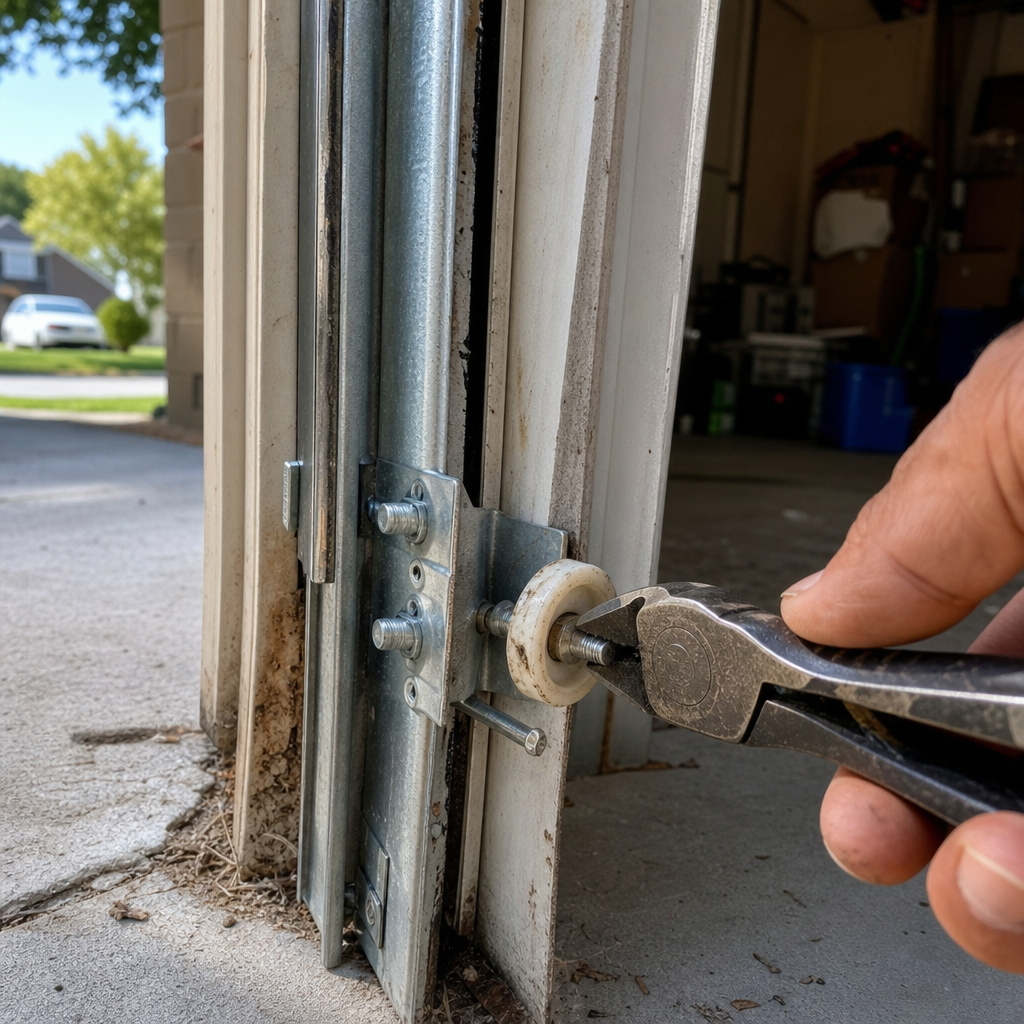
Raynor Weather Seal Replacement: The Florida Owner’s Guide
Raynor weather seal replacement in Florida typically runs $150-$600 installed, depending on door width and whether the retainer track also needs work. We stock Raynor-compatible seals for most residential series and can usually swap it same day. Most owners notice the problem first as water pooling after a summer storm, or daylight showing under the door where the rubber used to sit flat.
Which Raynor Models This Applies To
Raynor has used three main bottom seal profiles across their residential lines, and matching the wrong one leaves gaps that defeat the purpose. The T-style bulb seal fits most Raynor Advantage and Raynor Aspen series doors from 1995 onward. The beaded seal, sometimes called tongue-and-groove, appears on older Raynor Traditions and certain builder-grade models from the 1980s and 90s. The third type, a wider U-shaped rubber with integrated ribs, ships on newer Raynor Distinctions and some commercial-lite models.
The part number usually hides on a sticker inside the top section of the door, but Florida heat degrades those stickers to illegibility within about eight years. When that happens, we measure the retainer width, count the ribs, and check the door’s age against Raynor’s spec sheets. We carry quality aftermarket equivalents that match OEM dimensions exactly; the rubber compound is the same EPDM formulation, rated for UV and ozone exposure. For owners in coastal Florida, we also stock a salt-air-resistant variant that outlasts standard rubber by roughly 30 percent near the water.
We are an independent service provider, not affiliated with Raynor.
Signs Your Raynor Weather Seal Replacement Is Failing
- Water intrusion after rain. Florida’s afternoon downpours test every seal. When the rubber hardens and loses contact with the floor, water sheets inward instead of draining away. We see this most in garages with slight floor settlement, common in Pembroke Pines and Coral Springs slab homes built on fill.
- Daylight visible under the closed door. A proper seal compresses to fill minor irregularities. Once the bulb cracks or the T-slot loosens, a pencil-thin gap runs the width of the door. That gap also admits insects and the humidity that rusts tools and bicycles.
- Rubber cracking or crumbling at the edges. Florida UV is relentless. EPDM rubber rated for 10 years in Ohio turns brittle in 5-7 years here. The first sign is a network of surface cracks; the second is chunks falling off when you brush against it.
- The seal drags or bunches when the door opens. This means the retainer track has separated from the bottom section, or the seal has shrunk and pulled out of its slot. Either way, the door strains the opener and the seal tears further with every cycle.
- Increased garage temperature and AC strain. A failed seal breaks the thermal boundary. In Florida, that means your garage HVAC works harder, or your adjacent kitchen and laundry rooms run warmer. The energy cost adds up before the water damage does.
Replacement Cost & What’s Included
Raynor weather seal replacement falls within our standard garage door repair range of $150-$600. Most single-car residential doors run toward the lower end, around $180-$280, including removal of the old seal, retainer inspection, and installation of the new rubber. Double-wide doors and commercial-lite Raynor models trend higher, especially if the aluminum retainer is bent or corroded from salt air and needs replacement too.
We quote flat before any work starts. The price covers the part, the labor, and the 90-Day Done Right Promise in writing. If the seal does not sit right or leaks on the next rain, we come back. No paperwork to file, no argument. Our trucks carry the common Raynor profiles, so most jobs finish in one visit without waiting on a parts order.
DIY or Call Us?
A homeowner can safely inspect the seal with the door closed. Look for cracks, gaps, and whether the rubber still springs back when pressed. You can also measure the retainer width with a tape measure to help identify the correct replacement profile.
Installing the seal is where DIY goes wrong. The bottom section of a garage door is under spring tension; bracing it improperly while you work can shift the door off the cables or damage the opener. The retainer track, especially on older Raynor models, kinks easily if pried incorrectly. We have replaced seals that a homeowner started, then called us after bending the retainer beyond repair. Do it right the first time. The second trip costs everybody.
Call (844) 871-6326 and we will quote you flat, show up when we say, and handle the tension safely.
FAQs
In Florida’s UV and humidity, expect 5-7 years for standard EPDM, or 8-10 years with the salt-air-rated compound we stock for coastal areas. Direct south exposure without shade accelerates that by a year or two. Call (844) 871-6326 for a free inspection if you are unsure of your seal’s age.
No. Once the rubber cracks or the bulb loses compression, patching with caulk or adhesive tape fails within weeks. The seal is a wear item, designed to be replaced whole. We carry the full replacement on the truck and swap it in one visit. Call (844) 871-6326 for a free estimate.
Most Raynor weather seal replacements take 45 minutes to 90 minutes, depending on whether the retainer track needs straightening or replacement. We arrive with the part and finish in a single visit. Call (844) 871-6326 to schedule.
Yes. We carry T-style, beaded, and U-shaped profiles in the common widths for Florida residential doors, plus the salt-air variant for coastal homes. If your Raynor model uses an unusual commercial seal, we source it overnight and return the next day. Call (844) 871-6326 to confirm fit for your door.
Written by Dale Hutchins, Owner, Mainspring Garage Door Co. of Florida at Mainspring Garage Door Co. of Florida, serving Florida and nearby areas.